
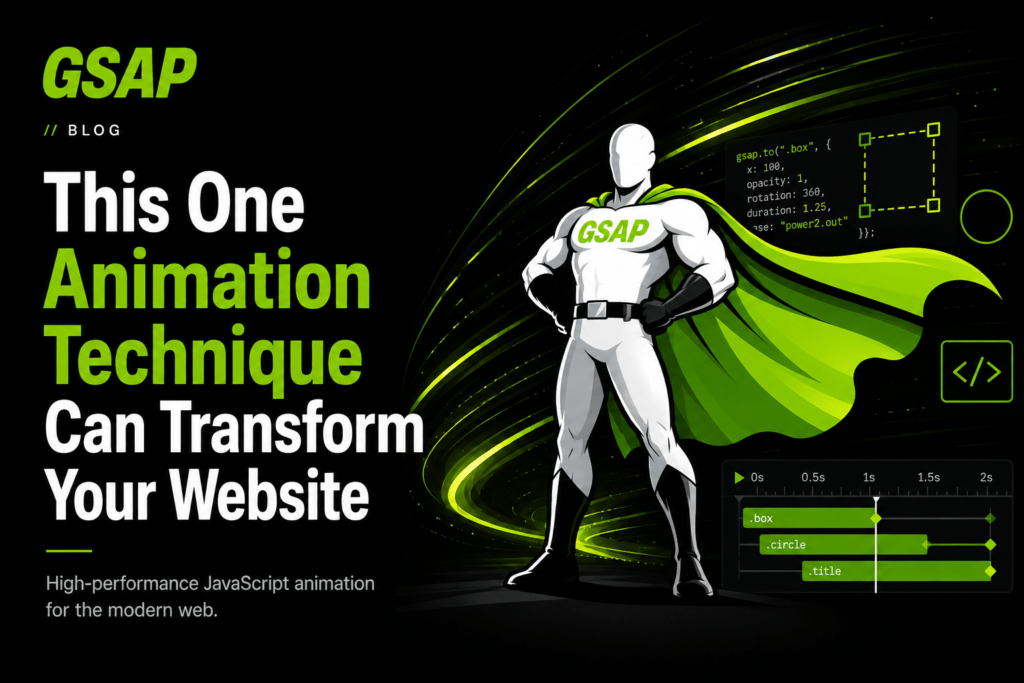
Why Traditional Websites Feel Outdated in Modern Frontend Development
Modern frontend engineering has evolved beyond static interfaces and simple UI transitions. Today’s users interact daily with highly immersive digital experiences created by companies like Stripe, Apple, Linear, Framer, and Airbnb. As a result, user expectations from websites have fundamentally changed.
Traditional websites built with static layouts, basic CSS hover effects, and minimal interaction often feel outdated because they fail to create visual continuity and engagement.
Modern web development is now heavily focused on:
- Motion systems
- Interaction design
- Scroll-driven storytelling
- GPU-accelerated animations
- Real-time UI feedback
- Immersive frontend experiences
This is why businesses investing in ecommerce website development are increasingly prioritizing frontend experience architecture instead of just visual design.
Today, companies searching for web development services near me expect websites that feel performant, responsive, and interactive across devices.
One animation technique currently dominating premium web experiences is scroll-triggered motion animation powered by GSAP.
The Core Technique: Scroll-Triggered Motion Systems
What Is Scroll-Based Motion Architecture?
Scroll-triggered animation systems dynamically update UI states based on viewport progression and user scroll position.
Instead of rendering content statically, frontend components react continuously to user movement. This creates:
- Progressive visual storytelling
- Dynamic content sequencing
- Real-time viewport interactions
- Controlled motion choreography
- Cinematic frontend transitions
Modern web developers in Hyderabad are increasingly implementing scroll-driven architectures using:
- GSAP ScrollTrigger
- requestAnimationFrame
- Intersection Observer API
- WebGL rendering pipelines
- Transform-based GPU animations
Unlike traditional DOM animations, modern motion systems synchronize animation timelines directly with scroll progression.
This creates fluid interaction patterns where users effectively “control” the animation through scrolling behavior.
Why GSAP Dominates Modern Animation Engineering
Limitations of CSS Animations
Traditional CSS animations have several frontend limitations:
- Weak timeline control
- Limited sequencing
- Poor orchestration
- Difficult scroll synchronization
- Reduced runtime flexibility
Modern UI systems require complex animation orchestration involving:
- Staggered transitions
- Dynamic timeline sequencing
- Scroll-linked state changes
- Performance optimization
- Reversible interactions
This is where GSAP becomes critical.
GSAP provides:
- High-performance animation pipelines
- Frame-perfect timeline control
- ScrollTrigger integration
- GPU-optimized transforms
- Smooth interpolation systems
- Runtime animation management
Leading website designers in Hyderabad are increasingly replacing CSS-heavy motion systems with GSAP because it provides significantly better animation control and rendering consistency.
The Technical Role of Motion in UX Engineering
Limitations of CSS Animations
Animations are not purely aesthetic components anymore. In modern frontend engineering, motion functions as a UX communication layer.
Motion improves:
- Visual hierarchy
- Spatial awareness
- Interaction feedback
- Navigation clarity
- Cognitive flow
- Perceived responsiveness
For example:
- Element transitions guide visual attention
- Motion continuity reduces cognitive load
- Animated state changes improve usability
- Scroll progression improves content absorption
In ecommerce website development, these systems directly impact:
- Product engagement
- Session duration
- Conversion rates
- Checkout interaction flow
- Product discovery experience
Modern web design companies in Hyderabad are increasingly integrating motion engineering directly into UI architecture because user engagement is now strongly tied to interaction quality.
GPU Acceleration and Performance Optimization
Why Modern Motion Systems Require GPU Rendering
One major reason modern websites feel smooth is GPU acceleration.
High-performance frontend systems avoid expensive layout recalculations by animating:
- transform
- opacity
- scale
- rotation
- translate3d
GSAP optimizes animations using GPU compositing pipelines, significantly improving rendering performance across devices.
Modern frontend engineers focus heavily on:
- Reducing layout thrashing
- Avoiding paint-heavy properties
- Minimizing main-thread blocking
- Optimizing animation frame execution
This is critical because poor animation architecture can destroy performance.
As experienced web developers in Hyderabad, we’ve seen many websites fail due to excessive DOM repainting and unoptimized animation systems.
Premium websites prioritize:
- Frame consistency
- Smooth interpolation
- GPU compositing
- Motion efficiency
- Runtime optimization
Scroll Storytelling in Modern Ecommerce Development
Why Modern Motion Systems Require GPU Rendering
One of the fastest-growing trends in e-commerce website development is scroll-based storytelling.
Modern ecommerce experiences now use:
- Product reveal animations
- Interactive scroll sequences
- Sticky motion sections
- Dynamic product visualization
- Scroll-controlled UI transitions
This architecture transforms e-commerce websites from simple product grids into immersive brand experiences.
For example:
- Products animate progressively during viewport entry
- Images scale dynamically during scroll
- Interactive UI layers respond to motion
- Checkout flows feel more responsive
Businesses searching for a website development company in Hyderabad are increasingly demanding these advanced interaction systems because they improve:
- Brand perception
- Customer engagement
- Conversion performance
- Product immersion
The Shift Toward Experience Engineering
Modern frontend development is no longer just interface development.
It is evolving into experience engineering.
The focus has shifted from:
Static UI → Interactive systems
Simple navigation → Motion choreography
Visual design → Emotional interaction
This evolution is heavily influencing:
- SaaS platforms
- Startup websites
- E-commerce ecosystems
- Enterprise dashboards
- Interactive portfolios
Today, businesses searching for web development services near me expect websites that feel technologically advanced and emotionally engaging.
This is why modern web development companies in Hyderabad are increasingly combining:
- GSAP
- React
- Framer Motion
- Three.js
- WebGL
- Motion architecture
to create immersive frontend ecosystems.
Conclusion
Modern websites are no longer evaluated purely by visual design. Users now judge digital experiences based on smoothness, responsiveness, interaction quality, and motion continuity.
Scroll-triggered motion systems powered by GSAP are transforming frontend engineering by enabling:
- Cinematic storytelling
- GPU-optimized rendering
- Dynamic UI choreography
- Immersive interaction systems
From ecommerce website development to enterprise platforms, motion architecture is becoming a core component of modern frontend strategy.
As experienced web developers in Hyderabad, we believe the future of web development belongs to brands that invest in experience engineering rather than static interface design.
The next generation of websites will not simply display information.
They will respond, interact, and feel alive.